



Managing corporate expenses is not just about tracking spend. It's about consistently enforcing policies and preventing non-compliant expenses before they affect financial records.
In many organizations, expense policy checks happen after submission or during audits. By then, violations have already occurred, approvals may have been granted, and corrective action becomes reactive.
Modern finance teams need proactive compliance.
This guide explains how real-time expense policy enforcement works, why violations happen, and how automated compliance controls reduce risk across corporate card and employee-paid expenses.
{{time-spent-on-reviewing-expenses="/did-you-know-cards"}}
What Is Expense Policy Compliance?
Expense policy compliance ensures that every submitted expense adheres to an organization’s predefined rules.
These rules can govern:
- Maximum spend limits
- Eligible categories
- Receipt requirements
- Employee-level restrictions
- Project or cost center rules
- Currency and exchange rate conditions
Compliance is not just about detection. It is about enforcing these rules before expenses move through approval and accounting workflows.
Why Expense Policy Violations Happen
Policy violations typically occur because of:
- Manual reviews after submission
- Delayed detection during approval
- Missing receipt documentation
- Lack of real-time visibility
- Corporate card transactions without immediate validation
- Employees unaware of policy limits
When checks happen late in the workflow, finance teams must correct errors retroactively, increasing friction and month-end workload.
{{nonexistent-policy-enforcement="/did-you-know-cards"}}
What Is Real-Time Expense Policy Enforcement?
Real-time policy enforcement means expenses are evaluated against defined rules automatically as soon as they are created or edited.
When an expense enters the system, policies are triggered immediately. If the employee updates the expense, policies rerun automatically to ensure continuous validation.
Compliance is not a one-time check. It is a dynamic process that follows the expense throughout its lifecycle.
How Automated Compliance Reduces Financial Risk
Real-time expense policy enforcement helps organizations:
- Prevent out-of-policy spending before approval
- Reduce fraud risk
- Maintain budget control
- Improve audit readiness
- Minimize month-end corrections
- Enforce consistent governance across teams
Instead of detecting violations after damage occurs, finance teams proactively control spend at the point of entry.
{{mainstem-expense-policy="/quote-banners"}}
How Sage Expense Management Enforces Expense Policies in Real Time
Sage Expense Management lets you set custom expense policies and automatically enforces them when expenses are created, edited, submitted, or reviewed.
So instead of catching out-of-policy spend at month-end (or after approval), finance teams can spot violations instantly and take action while the expense is still in motion.
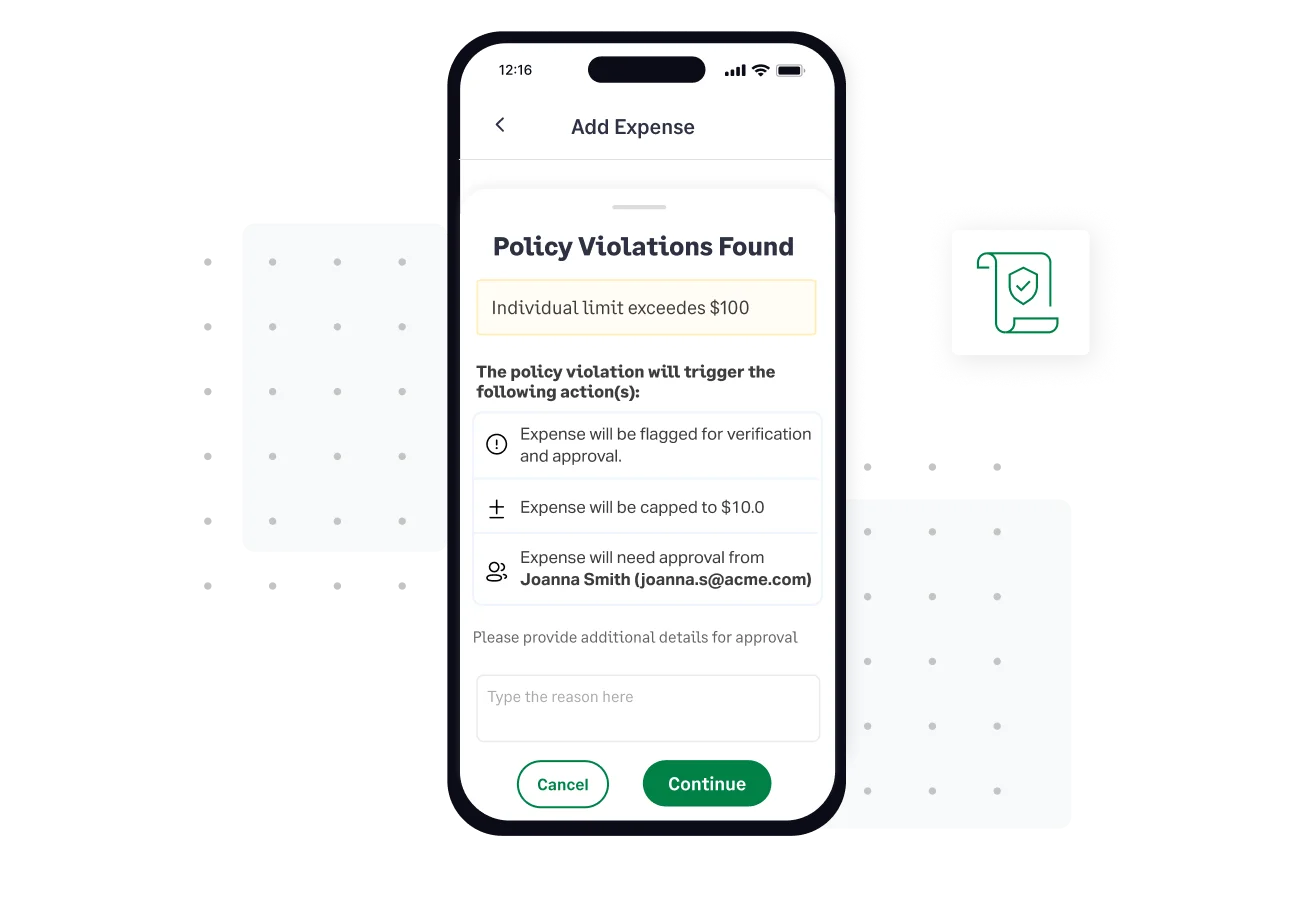
Here’s How It Works
- An employee creates an expense (employee-paid) or a corporate card transaction is imported into the system
- Sage checks the expense against your policy rules (amount limits, category restrictions, receipt requirements, payment mode, and more)
- If a violation is detected, it’s flagged instantly and the employee can see the warning right away
- Approvers see the violation clearly highlighted during review, so they don’t miss it
- Finance gets a clean trail of what was flagged, why it was flagged, and how it was resolved
No delays. No missed flags. No surprises at month-end.
Setting Up Policies in Sage Expense Management
Expense policies in Sage expense management are flexible, so you can enforce controls that match how your business actually spends.
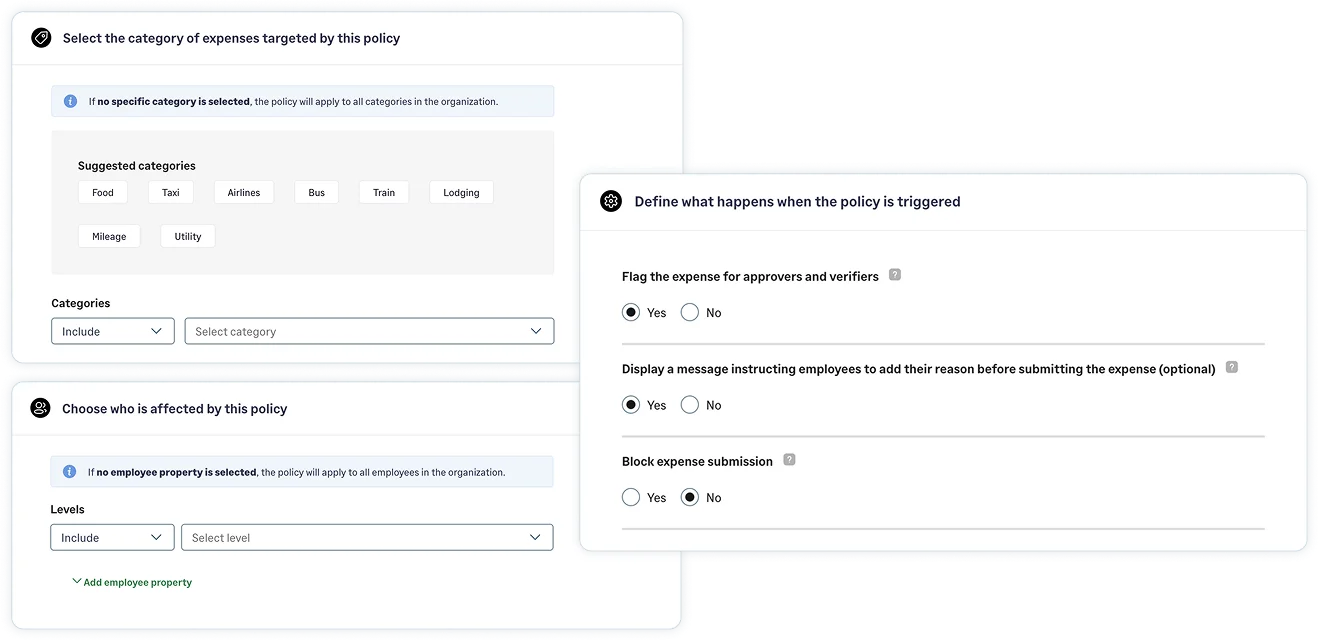
You can create layered policies based on:
- Amount limits (per expense, daily, weekly, monthly, quarterly, yearly)
- Expense category rules (allow, restrict, or set different limits by category)
- Receipt requirements (e.g., receipt mandatory above a threshold or for certain categories)
- Employee-based rules (by role/level, department, or other employee attributes)
- Project or cost center rules (different controls for different teams or budgets)
- Spend timing rules (expense age, spend date restrictions)
- Currency & exchange rate rules (foreign currency allowances, exchange rate deviation checks)
- Payment mode rules (corporate card vs employee-paid expenses)
Two Ways to Enforce Policies: Soft vs Critical
Not all violations should be treated the same. Sage expense management supports two enforcement levels depending on how strict you want to be:
- Soft policies (Warn and proceed): The expense is flagged, and the employee can still submit it (often with a justification). Approvers can see the violation during review.
- Critical policies (Block submission): The expense is blocked until it’s corrected. This is useful for strict controls like missing receipts, hard limits, or restricted spend categories.
This lets finance teams balance control with operational flexibility.
What This Looks Like in Practice
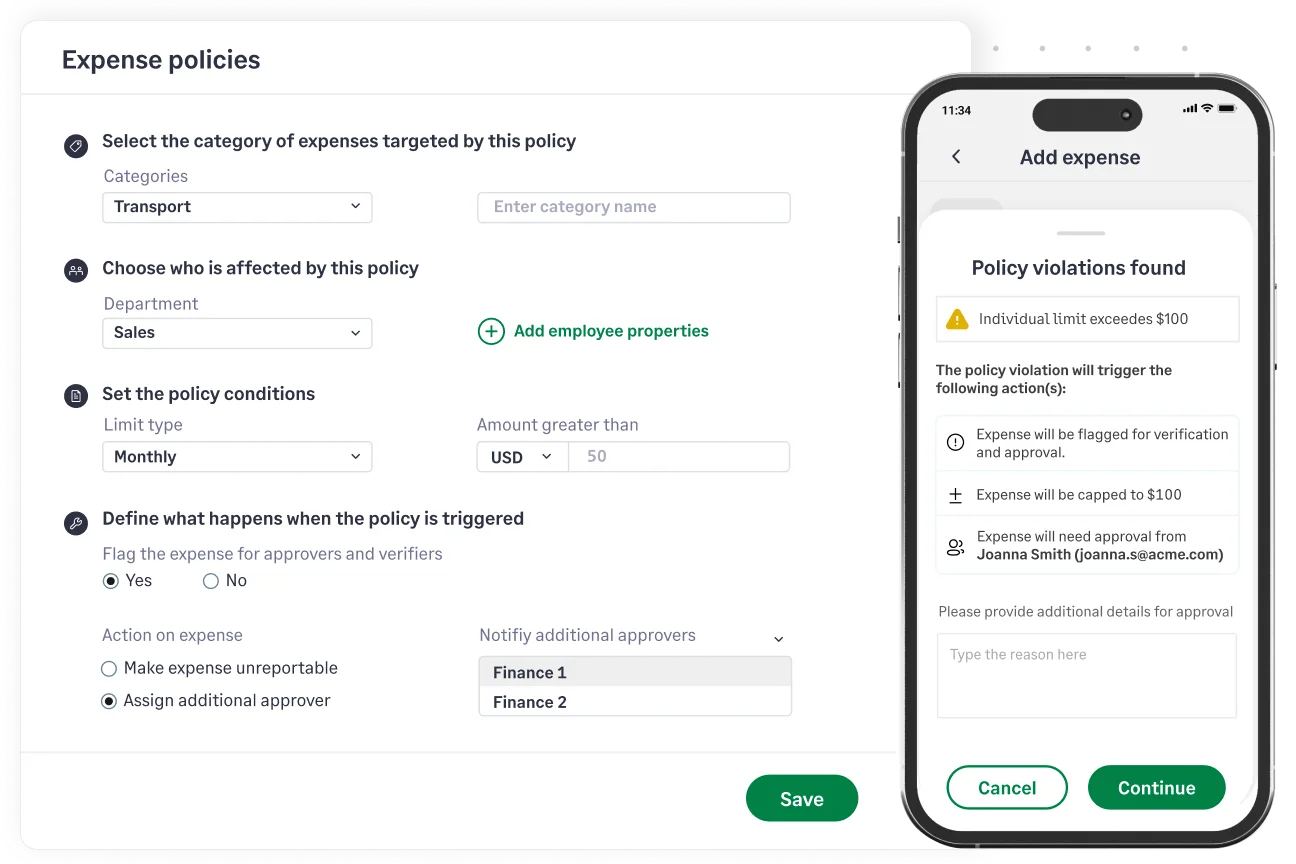
Let’s say an employee submits a $180 meal expense, but your policy requires receipts above $75 and caps meals at $150.
Here’s what happens:
- Sage expense management checks the category and amount automatically at the time of submission
- The system detects two violations:
- Receipt required (missing receipt)
- Amount exceeds the allowed limit
- Based on how your policy is set:
- The expense may be flagged (soft policy) and require an explanation, or
- It may be blocked (critical policy) until the receipt is attached / details are corrected
- The approver sees the policy violation clearly highlighted during approval review
- Finance gets a complete audit trail without chasing receipts or discovering issues after approval.
That’s the difference between policy “guidelines” and real enforcement.
From Reactive Audits to Continuous Compliance
Expense compliance should not depend on after-the-fact reviews.
By enforcing policies in real time, automatically rerunning validations, flagging or blocking violations, and capping reimbursable amounts when necessary, organizations build a continuous compliance framework.
Modern expense management is not just about tracking spend. It is about preventing policy violations before they impact financial outcomes.
{{real-time-expense-compliance="/cta-banners"}}